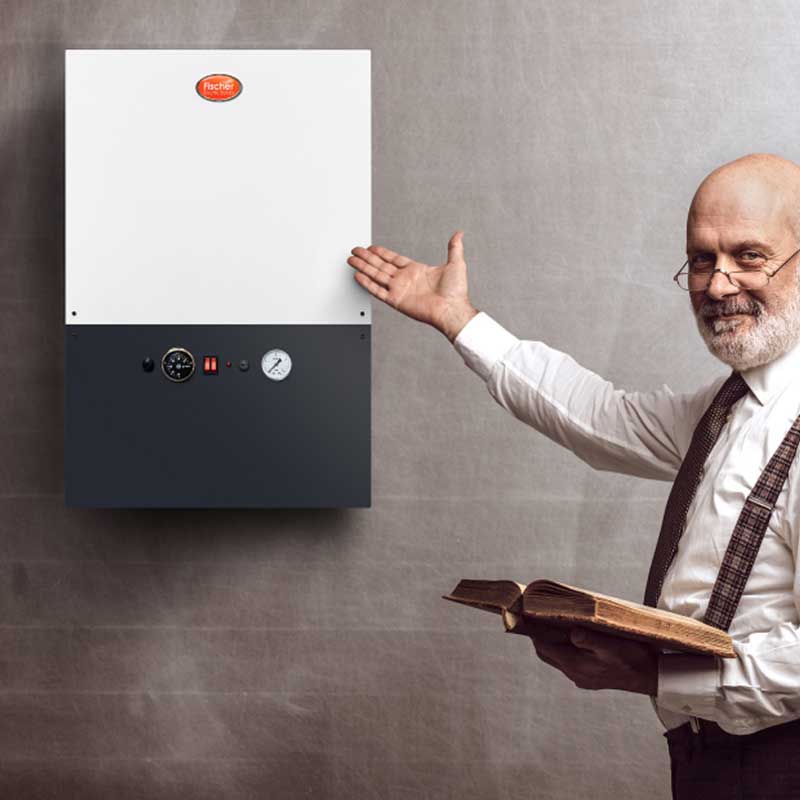
Although the Government released plans to phase out the sale of gas boilers, these rules have since been scrapped, meaning that they’re no longer banned, and property owners can update their homes with traditional systems like a combi boiler.
Given the change to gas boiler guidelines, it’s caused some confusion on what heating systems are available, and what type of boiler you should and shouldn’t install in a property. As the Government’s overall net zero targets are still in motion, many homeowners are reassessing the long-term role of traditional gas combi boilers and are looking at electric heating alternatives.
With more homes installing modern electric systems, it raises the question – is a combi boiler still needed? To understand what heating system is best for your home, a good starting place is understanding how combination boilers work and how alternative heating solutions like electric combi boilers can replace traditional gas systems.
How does a combi boiler work?
A combi (combination) boiler is a single, compact unit that provides both central heating and hot water. Gas combi boilers work by burning natural gas to heat water instantly (“on demand”), providing a consistent hot water supply as long as gas is available. Unlike traditional systems, it does not require a separate hot water cylinder or loft tank, but a combi boiler relies on a flue (fitted through an external wall usually out of your home’s roof) to safely remove exhaust gases generated by creating heat.
How does an electric combi boiler work?
Electric combination boilers, often referred to as electric combi boilers, work by using internal electric heating elements to warm up cold water instantly as it passes through the unit. They supply both central heating and hot water whenever you need it, without the need to rely on fossil fuels like gas, or a flue or water tank. Because it heats only what is needed, it delivers 100% efficiency and needs minimal maintenance.
The differences between gas combi boilers and electric boilers
When deciding whether a combi boiler is still the right choice for your home, it’s important to understand how gas and electric models differ. Although both systems provide heating and hot water, the way they operate and the long-term implications on cost, sustainability, and home efficiency vary significantly. The main difference when comparing an electric boiler vs combi boiler, is that electric systems provide 100% efficient heat without relying on fossil fuels or flue installations.
Energy source and environmental impact
Gas combi boilers rely on natural gas, a fossil fuel that produces carbon emissions. Home heating accounts for 38% of gas use in the UK, with the average home emitting around 2.2 tonnes of CO2 per year. Although there is no longer a gas boiler ban, at these levels gas heating systems will continue contributing to the UK household’s carbon footprint, leaving homeowners at risk of rising gas prices.
In comparison, electric combi boilers use electricity to generate heat. When paired with a renewable electricity tariff, they can run on 100% clean energy, instantly reducing your carbon footprint. To increase your home’s use of renewable energy sources, electric boilers integrate with air source heat pumps and solar panels, reducing further reliance on the grid.
Installation and maintenance requirements
A gas combi boiler requires a flue, meaning it has to be installed in an accessible space near an external wall for ventilation. They also require annual Gas Safe inspections to ensure they’re safely operating. Because gas boilers are built with more components, there’s also more potential for wear and tear. Any damages to a gas boiler can set you back up to £500!
However, an electric boiler doesn’t need a flue, meaning it can be installed almost anywhere in the home – which also means they’re perfect for people living in flats. Built with no moving components, it requires minimal maintenance (Fischer boilers come with a 10 year guarantee). In comparison, the lifespan of an electric boiler can last 15-25 years vs a gas boiler’s average 10-15 years.
Efficiency and running costs
Electric combi boilers act as hot water boilers powered by electricity, and are typically 100% efficient at the point of use – meaning every unit of electricity goes directly into heating your home or water. When less energy is required, electric combi boilers like Fischer’s automatically reduce power by up to 50% if it senses that you need less heat over the next hour.
In contrast, gas boilers lose energy through flue gases and overtime lose their efficiency, meaning they end up using more power to provide heat for your home.
Do I still need a combi boiler – or is it time to go electric?
While a combi boiler may still work for many homes, the long-term emissions of gas systems make electric alternatives the more sustainable choice. If you’re looking for combi boiler alternatives or generally considering making the switch from a gas boiler, Fischer’s range of quality electric boilers, radiators and electric heating systems offers a future-proof solution to transform your property into a warm, reliable and sustainable home.
Speak to our team of experts who are more than happy to guide you through the process of switching from a gas boiler to an electric heating alternative.